
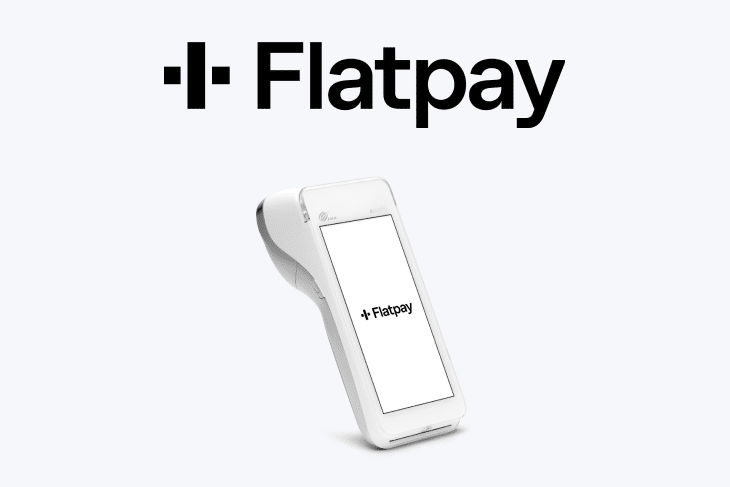
What Flatpay Is and Why It Is Getting Attention
Flatpay is a European payment technology company founded in Denmark with a straightforward pitch: stop paying a percentage of every sale to your payment processor, and switch to a flat monthly fee instead. While most card payment providers take 1.5–2.5% of every transaction indefinitely, Flatpay charges a fixed monthly subscription plus a small flat fee per transaction — regardless of the sale value.
For a business processing a £200 meal, a £500 boiler repair, or a £150 clothing purchase, that distinction matters. On a percentage model, those transactions each generate a meaningful fee for the processor. On Flatpay’s model, the fee is the same whether the card reader processes £5 or £500. That is the core of the value proposition — and for the right business, it is genuinely compelling.
How Flatpay’s Pricing Model Actually Works
The mechanics are straightforward. You pay a flat monthly fee to Flatpay for access to their payment terminal and platform. On top of that, each transaction carries a small fixed cost — not a percentage of the sale value. The exact figures vary by market and plan, but the structural difference from traditional processors is consistent: your processing costs do not scale with the size of what you are selling.
This model rewards businesses that have consistent card volume and higher average transaction values. A restaurant turning over £20,000 per month in card payments at a traditional 1.75% rate is paying £350 in processing fees every month — month after month, year after year. On Flatpay’s flat model, that same volume costs a fixed monthly amount that typically comes in well below that figure at scale.
The model is less advantageous for businesses with very low transaction volumes or strongly seasonal patterns. If card payments are infrequent, committing to a monthly fee regardless of usage is a less efficient structure than paying per transaction only when it happens.
The Hardware: Simple, Reliable, and Purpose-Built
Flatpay supplies its own payment terminals rather than relying on third-party hardware. The devices are compact, designed for counter-top use, and support all major card types and contactless payment methods including mobile wallets. Setup is fast — Flatpay’s onboarding process is built for business owners who are not technical, and most terminals are operational within a day of arrival.
The hardware itself is functional and well-built without being flashy. Connectivity options include Wi-Fi and SIM-based mobile data depending on the model, which means the terminal works reliably in environments where a stable Wi-Fi connection is not guaranteed — outdoor events, mobile services, or older commercial premises with patchy connectivity.
Where Flatpay Works Best in Practice
Flatpay is a particularly strong fit for food and hospitality businesses, trades and field service companies, and independent retail shops — categories where card transaction values are meaningful and volume is consistent. A plumber averaging £250 per job, a café averaging £18 per customer across 80 covers a day, or a boutique averaging £60 per basket all benefit significantly from a model where the fee per transaction does not grow with the ticket size.
It also suits businesses that have been on traditional payment processors for several years and have never revisited whether the percentage model is still the right fit. Many business owners are effectively paying a fee that made sense when they were small and low-volume but that they have never challenged as turnover has grown.
Flatpay’s Availability and Market Coverage
Flatpay currently operates in a selection of European markets including the United Kingdom, Denmark, Sweden, Norway, Finland, Germany, the Netherlands, and Belgium. If your business operates outside these markets, Flatpay is not yet an option — and for businesses operating across multiple countries, you would need to verify availability in each territory before committing.
Expansion is ongoing, but Flatpay is explicitly a European business at this stage. It is not a global payment solution and should not be evaluated as one.
What Flatpay Does Not Do Well
Flatpay’s platform is focused on in-person card payment processing. It is not an all-in-one commerce platform. If you need built-in inventory management, staff accounts, loyalty programmes, or a full point-of-sale system, Flatpay will need to sit alongside other tools — it does not replace them natively the way some competitor platforms do.
Reporting and analytics are functional but not deep. For businesses that want granular sales data, category-level reporting, or integrated accounting exports, the native reporting in Flatpay is a starting point rather than a complete solution. Integration with accounting software is worth confirming for your specific setup before switching.
Customer support is generally responsive, but like most modern payment companies, Flatpay does not offer a dedicated phone line for every plan tier. For businesses that want a named account manager or guaranteed response windows, that is worth factoring into the decision.
Is Flatpay the Right Payment Terminal for Your Business?
Flatpay is the right choice if you process card payments consistently, your average transaction value is meaningful, and you have been on a percentage-based processor long enough to do the maths on what that has actually cost you. The flat-fee model is not complicated — it just requires calculating your monthly card volume and comparing the real cost of both models side by side.
If you are just starting to accept cards, processing low volumes, or running a highly seasonal business, the commitment of a flat monthly fee is less compelling than a pay-per-transaction model. And if you need a full POS system with inventory and staff management built in, Flatpay alone will not cover all of that ground.
But for established businesses that take cards regularly and have never questioned why they are paying a percentage of every sale to a processor, Flatpay is a genuinely worthwhile conversation to have.